Interior Design in Dubai & Abu Dhabi: The Complete 2026 Guide
Interior design in Dubai & Abu Dhabi for 2026: homes and commercial spaces, the scope of work, the process, what drives cost and how to choose the right company.
Planning a new home, office, shop or hotel in the UAE raises the same questions every time. What does an interior design company actually do? What is included in a fit-out? How long will it take, what drives the cost, and how do you pick the right team?
This guide answers those questions for interior design in Dubai and Abu Dhabi in 2026. It covers residential and commercial projects, the typical scope of work, the steps from brief to handover and what to look for when choosing a company. It is written from the experience of ARC, a design-and-build studio founded in Abu Dhabi in 1997.
Interior design, fit-out and decoration: what is the difference?
These words are often used as if they mean the same thing. They don’t.
- Interior design is the planning of a space: the layout, the look, the materials, the lighting and the furniture. The result is a set of drawings and specifications.
- Fit-out is the building work that turns those drawings into a finished space: partitions, ceilings, floors, joinery, and the electrical and mechanical work that goes with them.
- Decoration is the final layer: paint, fabrics, artwork and accessories.
Some companies only design. Some only build. A design-and-build company does both, so one team is responsible from the first sketch to the keys. ARC works this way, with interior design and fit-out contracting under one roof, alongside exterior design, furniture supply, landscaping and building maintenance.
Residential interior design in Dubai and Abu Dhabi
Homes in the UAE range from city apartments to large family villas and palaces. Each brings its own priorities.
Villas and family homes
Villa projects are usually about how a family lives day to day. Common priorities include:
- Separate formal and family areas, including a majlis for receiving guests.
- Generous storage and well-planned kitchens.
- Bedrooms and bathrooms that feel calm and private.
- A link between inside and outside, through terraces, gardens and outdoor lounges.
Communities such as Emirates Hills in Dubai, or the villa districts of Abu Dhabi, often call for a design that works with large rooms and high ceilings without feeling empty. Proportion, lighting and furniture scale matter as much as finishes.
ARC has developed concept designs for private palaces and villas in Abu Dhabi, covering both architecture and interiors, from classical façades with arched windows to reception halls with crystal chandeliers. In Dubai, our residential work includes compound renovations for Emaar. For more on homes, see our villa interior design guide.
Apartments
Apartments need more careful planning of space. Built-in joinery, flexible furniture and good lighting can make a smaller home feel larger. Building rules also apply: most towers have their own fit-out guidelines and approval steps.
Commercial interior design in Abu Dhabi and Dubai
Commercial interiors have to look right and work hard. The brief usually starts with the business, not the style.
Offices and headquarters
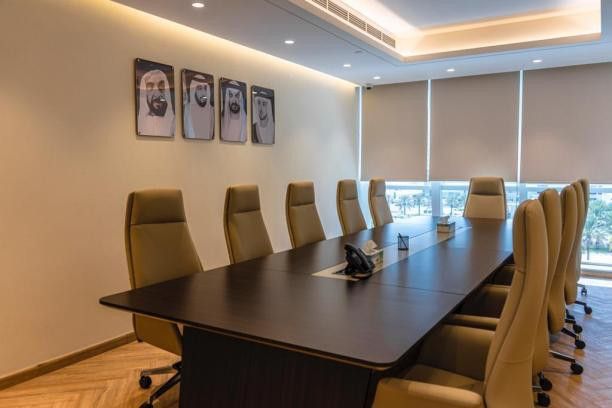
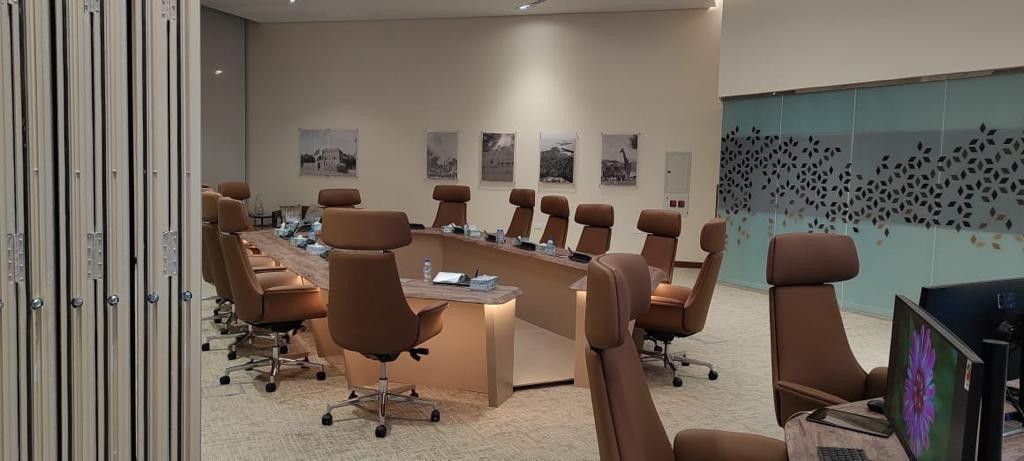
A workplace should support how people actually work: focused desks, meeting rooms, quiet spaces and places to meet informally. Reception areas and board rooms carry the brand’s image for visitors.
ARC designed and fitted out interiors for the National Library and Archives in Al Rawdah, Abu Dhabi, between November 2021 and March 2022. The work includes an executive office with backlit display shelving and an open-plan office where workstations are separated by tall curved partitions under a sweeping ceiling with linear lights.
Hotels and hospitality
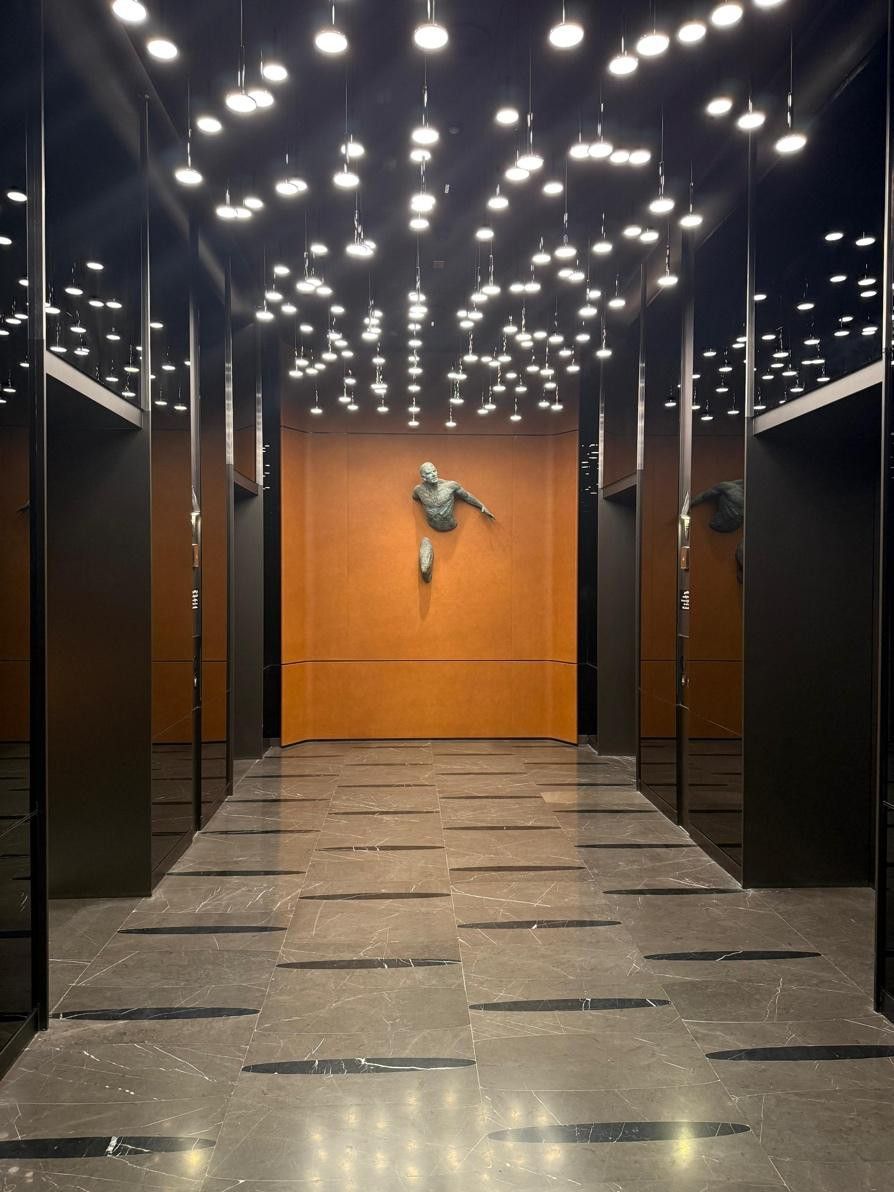
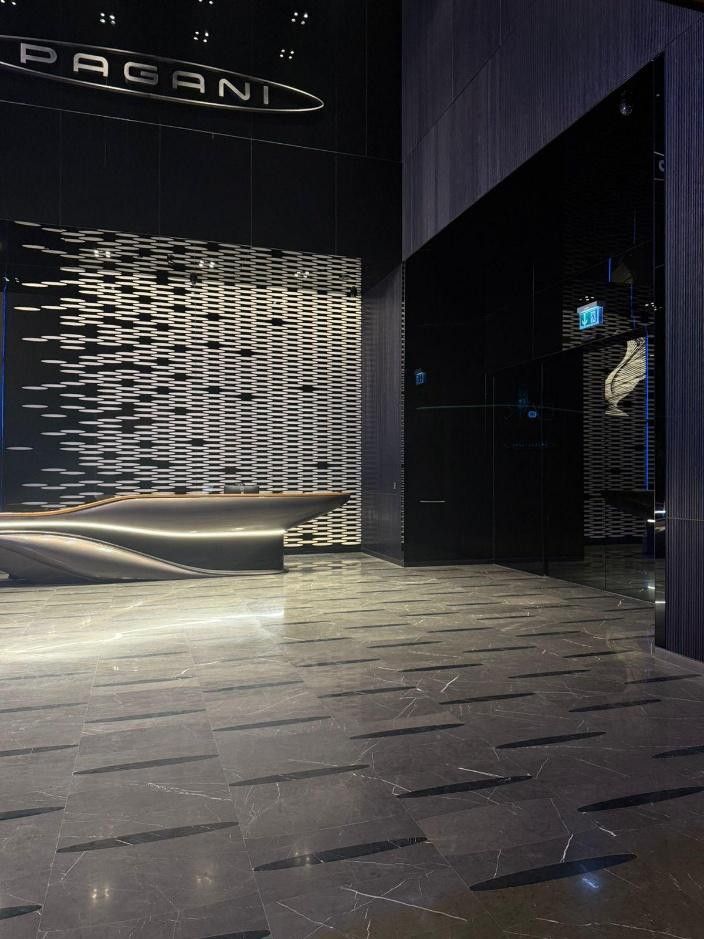
In hospitality, the lobby sets the tone for the whole stay. Durability matters too, because hotel spaces are in use day and night. ARC carried out the full fit-out at the Pagani Hotel in J One Tower, Business Bay, Dubai, for Dar Al Arkan Properties LLC in July 2025, including the lobby and lift lobbies.
Retail, restaurants and cafés
Shops and restaurants are designed to attract people, move them through the space and bring them back. We cover this in depth in our guide to retail interior design in Dubai and Abu Dhabi.
Government and public sector
Government projects add their own requirements, such as security, formal reception spaces and strict quality standards. ARC’s government work includes projects for the Department of Municipalities and Transport and the Ruler’s Representative Court in Al Dhafra.
Interior design trends in the UAE for 2026
Trends come and go, but a few directions are shaping homes and workplaces in the UAE right now:
- Warm, natural materials. Timber, stone and textured plaster are replacing high-gloss finishes in many projects.
- Calm, layered lighting. Cove lighting, concealed strips and dimmable fittings create mood without glare.
- Curves and soft shapes. Rounded counters, curved partitions and arched openings feel welcoming.
- Regional character. Patterns, screens and craft details that reflect local heritage, used in a modern way.
- Spaces that last. Clients are choosing finishes that wear well and are easy to maintain, rather than designs that date quickly.
- Flexible commercial spaces. Offices that can adapt as teams grow or change how they work.
A good designer uses trends as ideas, not rules. The best interior is the one that still suits you in ten years.
Scope of work for an interior fit-out in Abu Dhabi
A clear scope of work protects both the client and the contractor. It sets out what is included, what is not, and who is responsible for each part. For a typical interior fit-out in Abu Dhabi or Dubai, the scope usually covers:
- Survey and measurements of the existing space.
- Design drawings: layouts, ceilings, lighting, elevations and joinery details.
- Approvals: submissions to the landlord or building management, the relevant municipality and Civil Defence, as required for the project.
- Demolition and preparation of the site.
- Partitions and ceilings, including any acoustic needs.
- Mechanical, electrical and plumbing (MEP) works: air conditioning, power, lighting, data, drainage and fire safety systems.
- Flooring and wall finishes.
- Joinery and custom furniture, such as counters, wardrobes and display units.
- Loose furniture and accessories, if included.
- Testing, snagging and handover, with drawings and warranties.
Ask for anything not included to be listed as an exclusion. Unclear scope is one of the most common causes of delays and extra costs.
The interior design process, step by step
Every company has its own method. At ARC, each project follows five stages with one point of contact:
- Brief. We listen, survey the site and agree scope, budget and programme.
- Concept. Layouts, mood and 3D visuals, developed with you until approved.
- Design development. Detailed drawings, with materials, lighting and furniture specified.
- Execution. Fit-out by our site team, with regular progress updates.
- Handover and care. Snagging, handover and ongoing maintenance.
The biggest lesson from any project is simple: decisions made early cost less. Changing a drawing is cheap. Changing a finished wall is not.
What drives the cost of interior design
There is no single price for interior design in the UAE, because no two projects are alike. The main factors are:
- Size and condition of the space.
- Scope: design only, or design and full fit-out.
- Finishes and materials, from standard to premium.
- Custom joinery and furniture.
- MEP changes, such as moving air conditioning or adding power.
- Programme: a faster programme can mean more workers on site or night shifts.
A detailed design gives the most accurate price. Be careful with quotes that look much lower than others; they often leave items out of the scope.
How to choose an interior design company in Dubai or Abu Dhabi
When comparing companies, look at:
- Real, completed work. Photos of finished spaces tell you more than renders. Ask which projects were actually built.
- Design and build capability. Can the company deliver what it designs, or will you need a separate contractor?
- Licensing and certification. Check the trade licence and any quality, environmental or safety certifications.
- Process and communication. Who will be your point of contact, and how will you be updated?
- Aftercare. Who will fix problems after handover?
- Experience in your sector. A hotel, a villa and an office all need different knowledge.
Where ARC fits
ARC has designed, built and maintained interiors for government, hospitality, retail and private clients across the UAE since 1997. We work in Abu Dhabi, Al Ain, Al Dhafra, Dubai and Sharjah.
- Six services under one team: interior design, exterior design, fit-out, furniture supply, landscaping and maintenance.
- More than 70 fit-out projects delivered.
- Licensed in Abu Dhabi and certified to ISO 9001, ISO 14001 and ISO 45001.
- Consultancy and site supervision are also available as stand-alone services.
Frequently asked questions
What does an interior design company in Abu Dhabi do?
It plans the layout, look, materials, lighting and furniture of a space. A design-and-build company like ARC also carries out the fit-out, so the same team takes the project from design to handover.
How long does an interior design project take?
It depends on the size of the space, the scope of work and the approvals needed. A single room is quicker than a full villa or office floor. Your designer should give you a programme at the brief stage.
Do you design both homes and commercial spaces?
Yes. ARC works on villas and palaces, offices, hotels, restaurants, shops and government buildings.
Can I hire you for design only?
Yes. You can appoint ARC for design only, design and fit-out, or consultancy and site supervision on their own.
Do you work in Dubai as well as Abu Dhabi?
Yes. ARC is based in Abu Dhabi and serves Abu Dhabi, Al Ain, Al Dhafra, Dubai and Sharjah.
Talk to ARC about your project
A good interior starts with a clear conversation about how you want to use the space, your budget and your timeline. Whether it is a family home, an office or a hotel lobby, we would be glad to hear about it. Contact ARC to arrange a first meeting with our team.